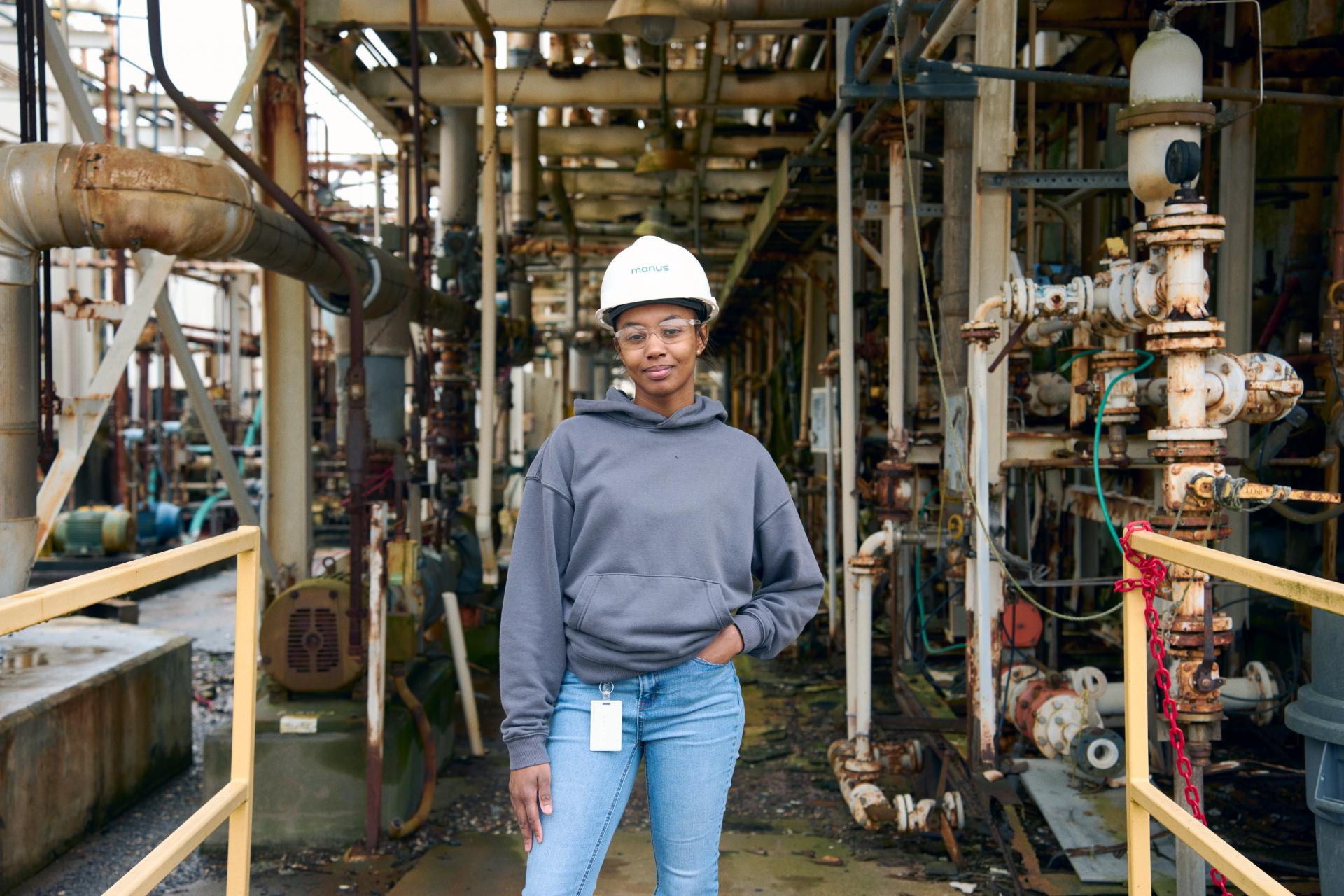
Laboratory Operations Specialist at the Augusta BioFacility
Manus and The University of Texas at Austin complete BioMADE-sponsored program to improve product recovery in biomanufacturing
Press Release
September 8, 2026
Media Relations Contact
Frederik Bjoerndal
Senior Vice President, Corporate Affairs and Marketing
A programmed lysis approach cut mechanical separation energy by more than 50 percent at pilot scale, widening the range of BioAlternatives that can compete on price

Manus, The BioAlternatives Company®, and the University of Texas at Austin have completed a BioMADE-sponsored program to make industrial yeast fermentation more efficient and more sustainable.
The project, carried out with Dr. Hal Alper and the Alper Lab in UT Austin's McKetta Department of Chemical Engineering, engineered yeast to disrupt their own cell walls at the end of fermentation. This "programmed lysis" approach simplifies downstream processing by reducing reliance on energy-intensive mechanical disruption and removes the need for hazardous solvent-based extraction. The result is lower production costs and improved sustainability across a broad range of bioalternative products that accumulate inside cells, including lipids, proteins, vitamins, pigments, biosurfactants, and polysaccharides.
The team successfully demonstrated the technology up to pilot scale (300 liters) for two industrially relevant yeasts. In Yarrowia lipolytica, engineered strains enabled a reduction in mechanical separation energy requirements by more than 50 percent. In Saccharomyces cerevisiae, the team achieved autolysis in a relevant production strain. The work advanced the technology from laboratory demonstration to integrated pilot operation.
"Downstream processing is one of the largest hidden costs in biomanufacturing, and it heavily influences whether a bioalternative can compete on price. By engineering yeast to disrupt their own cell walls, we reduce cost, energy, and complexity, which widens the range of products that can be made economically and sustainably at scale," says Christine Santos, Chief Technology Officer, Manus.
“This work uniquely combined academic and industrial settings to take bench-scale discoveries and more rapidly translate them to higher technology readiness,” says Hal Alper, The University of Texas at Austin. “This technology finally helps to address the challenge of producing cheaper intracellular products that traditionally require high-cost separations and more laborious process steps.”
The technology has broad application across many products that are made and accumulate inside microbial cells. By cutting processing intensity and improving recovery, these advances strengthen the case for domestic biomanufacturing built on abundant, low-cost American feedstocks.
Share this article:
Featured articles


Follow the transition, up close!